 24/7 Emergency Service: (770) 757-3530
 2 min read
2 min
Dragline and Shovel Gears: Minimizing Downtime in Mining Operations
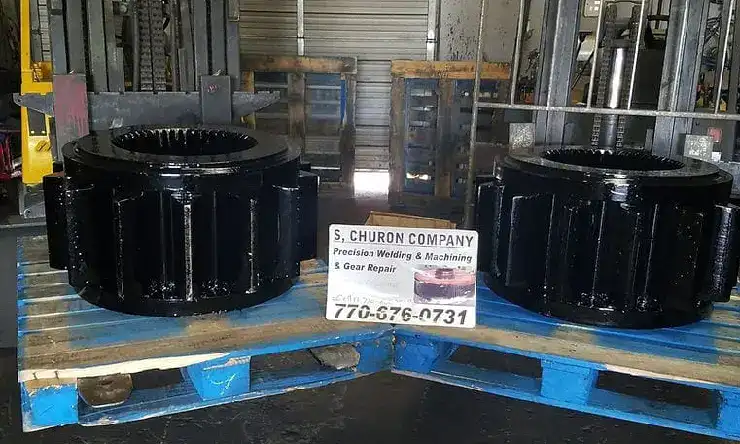
The Financial Reality of Surface Mining Mechanical Integrity
Surface mining operations manage rigid production schedules where a single hour of unplanned equipment downtime directly compromises quarterly throughput. Draglines and electric rope shovels serve as primary movers in these environments. When their mechanical drive systems fail, production halts immediately, leaving downstream hauling and processing infrastructure completely starved of material.
For maintenance managers, understanding gear failure modes is essential. It represents the difference between a scheduled window and a catastrophic failure that sidelines equipment for weeks.
Churon Company provides specialized dragline repair and heavy shovel component rebuilding. By deploying deep mechanical expertise, our engineers diagnose and remediate complex gear assemblies under harsh, remote field conditions to restore operational integrity quickly.
Understanding the Anatomy of Dragline and Shovel Gear Systems
Draglines and electric shovels rely on heavily stressed gear trains to control core mechanical movements. Each assembly operates under severe torque thresholds and highly abrasive particulate exposure:
- Swing gears. Manage upper-structure rotational movement, enduring extreme inertial torque during slewing and cyclic shock loading during sudden starts and stops.
- Hoist gears. Actuate the lifting and lowering of the bucket assembly under highly variable mechanical loads.
- Propel gears. Drive the entire machine’s mobility, requiring dragline crawl or walk systems to support full deadweight across uncompacted, uneven terrain.
- Crowd gears. Direct the shovel’s dipper arm into the material face, bearing continuous high-impact resistance and crowd-force feedback.
Because these systems operate under continuous load and harsh environmental conditions, even minor wear can escalate into larger mechanical issues if left unaddressed.
A worn pinion often accelerates wear on the mating bull gear. Misalignment concentrates stress on a few teeth. By the time damage is visible, the entire gear set usually requires attention.
What Causes Heavy-Duty Gears to Fail
Heavy-duty mining gear failures typically stem from a combination of severe operational stresses and environmental ingress. Maintenance teams must monitor the following primary failure mechanisms:
- Pitting and spalling. Subsurface fatigue cracks develop under cyclic Hertzian contact stress, eventually propagating to the surface and causing material detachment.
- Structural tooth breakage. High-energy shock loads fracture gear teeth that have been structurally weakened by micro-fatigue.
- Particulate contamination. Airborne dust and mineral fines breach housing seals, transforming the open-gear lubricant into an aggressive grinding paste.
- Mechanical misalignment. Structural shifting or structural wear skews housing alignments, concentrating extreme load vectors onto narrow margins of the tooth face.
Understanding these failure modes allows maintenance teams to implement inspection protocols that catch problems early. A gear set showing early-stage pitting can often be repaired or replaced during a planned shutdown. The same gear set left in service until the teeth break will cause secondary damage to shafts, bearings, and housings—thereby multiplying repair costs and extending downtime.
Visual Signs of Gear Fatigue to Look For
Regular visual inspection identifies wear trends before they escalate. Maintenance planners should establish inspection intervals based on operating hours.
- Polished surfaces. Shiny areas indicate insufficient lubrication or abrasive contamination.
- Cratering. Small pits on the flanks of teeth are the first sign of contact fatigue.
- Discoloration. Blue or straw-colored marks suggest the lubricant failed to dissipate heat.
- Chipped edges. This usually results from misalignment or heavy impact loading.
Inspection should also include checking for abnormal noise during operation, increased vibration levels, and temperature rise in gear housings. These symptoms often precede visible damage and provide an earlier warning that intervention is needed.
When inspection reveals advanced wear or damage, the decision becomes whether to repair in place, replace components during the next scheduled shutdown, or take the machine out of service immediately to prevent catastrophic failure. Churon Company works with maintenance teams to evaluate gear condition, provide replacement options, and coordinate repair timing to minimize production impact.
Lubrication Requirements for Extreme Environments
Proper lubrication is the primary defense against wear. It separates metal surfaces and dissipates heat. Mining environments challenge lubricant performance. Extreme temperature swings and moisture degrade oil properties quickly.
Open-gear assemblies demand specialized, high-tack lubricants formulated to resist environmental washout while maintaining a continuous hydrodynamic film under heavy boundary loads. Rather than simply checking fluid levels, maintenance teams must utilize regular oil analysis and analytical ferrography. This proactively detects microscopic wear debris and particulate ingress before physical component failure occurs.
Contact Churon Company for Dragline and Shovel Gear Repair
Gear failures can ripple through an entire mining operation, making proactive inspections and early intervention essential to minimizing unplanned outages.
Churon Company provides turnkey dragline repair, shovel gear rebuilding, and remanufacturing services for high-production mining, coal, and aggregate operations. We restore critical components, including swing gears, hoist gears, propel systems, shafts, and gearboxes, to OEM-equivalent or better specifications, helping extend equipment life and reduce replacement costs.
With decades of experience supporting industrial plants, mines, and aggregate facilities nationwide, we offer both in-shop remanufacturing and 24/7 emergency field service to minimize downtime when unexpected failures occur. Contact us today to schedule an inspection, discuss your repair needs, or request rapid-response support.
 3440 Views
  0
0